The New Era of Poker Prep
Poker training has entered a new phase. The days of flipping through strategy books, analyzing basic hand charts, or watching grainy gameplay clips are behind us. What used to be a grind full of guesswork has become precise, systematic, and powered by AI driven tools that would’ve seemed like science fiction ten years ago.
Artificial intelligence has added structure to a game once ruled by feel alone. It breaks down hands, spots patterns that humans miss, and simulates millions of scenarios that would take lifetimes to play manually. This doesn’t just speed things up it makes the entire process sharper. And it’s not just sharks at the top tapping into this tech. From micro stakes grinders to serious tournament hopefuls, more players now approach the felt with a training plan that’s part sweat, part software.
This shift doesn’t mean instincts don’t matter anymore. It means those instincts are being trained and tempered by data, probability, and repetition. In a game where one decision can swing a session, precision pays off and AI is making that edge more accessible than ever.
Solvers: The Backbone of Modern Study
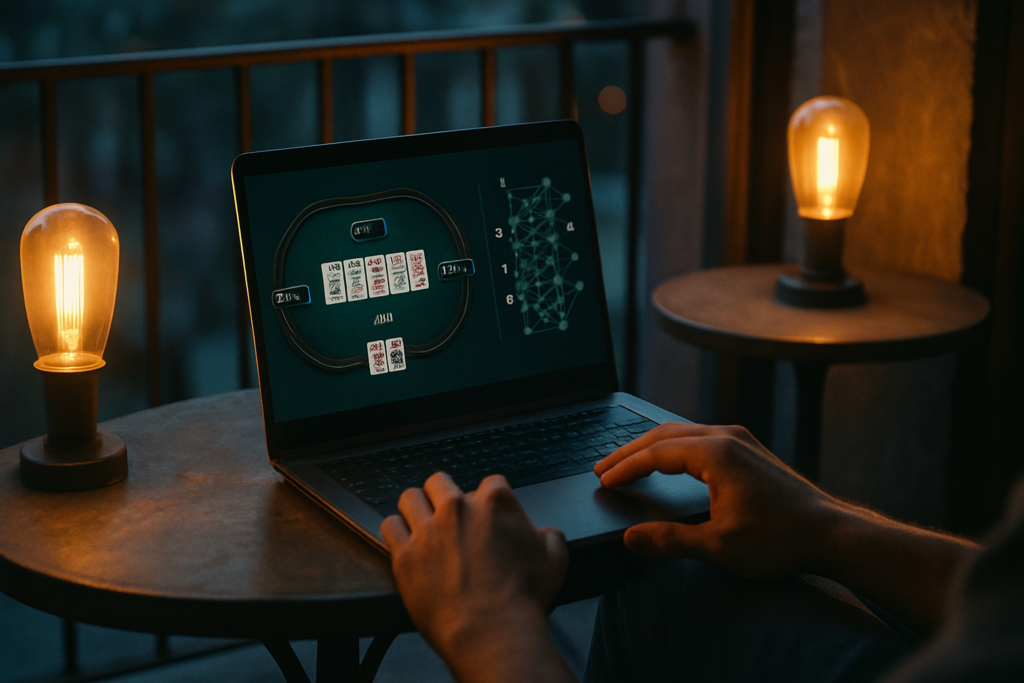
Poker’s become more about precision than gut feeling. Solvers like PioSOLVER, GTO+, and Simple Postflop are now the core of serious training routines. These tools don’t guess they calculate. They simulate countless hand combinations to map out Game Theory Optimal (GTO) decisions, down to the decimal. Bluff catch or fold? Bet small or jam? The solver isn’t guessing it already ran a million versions and found the best answer.
Players dive into nodes the branching decision points that show different possibilities and analyze EV (expected value) for each move. The goal isn’t just to memorize the outputs, but to see the logic. Why is a check better than a bet here? What mistakes cost the most over time? Solvers uncover those leaks and challenge even experienced players’ assumptions.
If you’re serious about progressing beyond instinct and into data backed mastery, solvers aren’t optional they’re essential.
Real Time Assistance: Controversial but Evolving
Real Time Assistance (RTA) sits in the middle of a very heated debate. These tools offer feedback during gameplay, whispering ideal lines as hands unfold. On paper, they sound like a dream. In practice especially in online or live tournaments they’re often viewed as outright cheating. And many platforms agree, with bans and detection systems ramping up.
But here’s the twist: the battle over RTA is also pushing training tools to evolve. Because creators can’t rely on real time prompts in high stakes settings, the demand for hyper realistic prep environments has exploded. Now, training modes mimic live play so well that making decisions under pressure becomes second nature by the time you’re actually in the arena.
The ethics are murky. Not all tools are created equally, and there’s a big difference between shady RTA bots and training platforms that guide you before a game, not during. But the line is thin and getting thinner. For serious players, the focus is shifting to mastering decision making away from the table. That’s where growth happens, and where the edge still qualifies as fair play.
Customized Training Through AI

Poker training has moved well beyond static strategy charts. Modern software tracks your mistakes, analyzes your habits, and builds drills tailored to close your leaks. Tools like Lucid GTO and DTO Poker Trainer lead the charge here. They mimic real world environments and throw scenario after scenario at you not just for the sake of reps, but to challenge your weak points with precision.
Instead of generic advice, you get targeted feedback. Made a mistake misplaying a draw on the turn? The software remembers. You’ll see that spot again, with slight variations, until you plug that leak for good. It’s a faster learning loop, trimmed to what actually matters to your game.
This shift toward personalized, adaptive training doesn’t just save time it compounds your edge. The more dialed in your study sessions, the more confident and consistent you’ll be at the table. And with tools constantly learning how you play, the drills stay fresh. This isn’t just study. It’s training that fights back.
The Data Edge
This isn’t about guesswork anymore. AI has elevated the poker grind with sheer numbers scanning millions of hands to unearth quiet patterns most players miss. Micro trends around bet sizing, fold equity, and timing tells aren’t just theoretical; they’re quantified in real data pulled across networks and sessions.
What does that mean in practice? You can break down your bankroll strategy under multiple stress tests. You can analyze your frequency rates not just whether you’re playing too loose or too tight, but where and how that’s bleeding EV. And maybe most important: the software spots exploits. It zeroes in on the habits of specific opponents, labeling tendencies that used to take pro level intuition and years of experience to recognize. That kind of profiling used to be gated knowledge. Now, it’s in the dashboard.
The best part? You don’t have to be a high stakes grinder to use it. These tools are getting cheaper, smarter, and more integrated every month. For up and comers, that levels the field. For veterans, it’s a challenge: adapt with the tech or keep playing catch up.
Staying Ahead: Why It Matters
The days when raw instinct and good table talk could carry you deep into a tournament are fading. Poker’s skill ceiling keeps rising, and the fastest climbers are leaning hard on AI driven training tools. From solvers to custom feedback loops, players using these systems aren’t just staying sharp they’re getting sharper faster than the competition.
Ignoring this shift is like playing with a hand tied behind your back. Every decision you don’t optimize is value you’re leaving on the table. Training with AI isn’t about automation it’s about alignment. You’re calibrating your game against a perfect, unblinking model of logic and probability. The more reps you get, the more second nature optimal play becomes.
In a game where inches separate profit from loss, tech trained players are creating miles of separation. Whether you’re a recreational player or chasing profit margins, adaptation isn’t optional anymore it’s the edge.
Explore more on the evolution of AI in poker strategy
Looking at the Bigger Picture
AI Is a Tool Not a Replacement
Many players worry that relying on artificial intelligence may dull their natural instincts. In reality, AI doesn’t replace skill it refines it. The best poker minds use AI to strengthen their decision making framework, not to avoid thinking altogether.
AI builds logic based systems you can lean on under pressure
It helps identify patterns and corrections that human intuition often misses
Over time, it reinforces strategic thinking instead of replacing it
The Human AI Balance
The strongest players know when to trust the machine and when to rely on feel. AI brings consistent logic to complex scenarios, but intuition still plays a powerful role, especially in live games where tells and table dynamics matter.
Machine precision offers mathematically grounded decisions
Human insight fills the gaps in unconventional or emotional situations
Expert strategy blends both to adapt effectively in real time
Studying Smarter = Winning More
With today’s tools, studying harder isn’t enough. Training efficiently targeting weaknesses, reviewing optimized play, and evolving alongside new tools is what sets top players apart. AI empowers players to be more intentional with their time and effort.
Personalized learning paths speed up growth
Solver drills and real time feedback improve real game performance
Consistent study with intention leads to long term edge
Bottom Line:
The future of poker training isn’t just smart it’s strategic. The players who master both logic and instinct, and who use AI to sharpen not replace their edge, will lead the next generation of the game.